




Dust Collection Efficiency Optimization for Aging ESP
Application
Industry: Cogeneration, Power
ESP OEM: Rothemuhle
Process: 200-ton Circulating Fluidized Bed (CFB) Boiler
Country: Tainan, Taiwan
Problem
The cogen plant was commissioned in 1999 and has been in operation for over two decades. It has a single-chambered ESP of 3 mechanical fields and 21 gas passages that collects fly ash from CFB boiler which uses coal and waste tire scraps as fuel and designed with outlet emission of 50mg/Nm3.
As internal parts degraded over long-time operation, the serrated-type Discharge Electrode (DE) were either slack or broken and caused frequent sparks, low kV and mA, that lowered dust collection efficiency resulting in stack emission exceeded its design value. ESP upgrade was required in order to be compliant with the new emission regulation of below 28mg/Nm3. Nevertheless, customer’s expectation was to achieve below 15mg/Nm3.
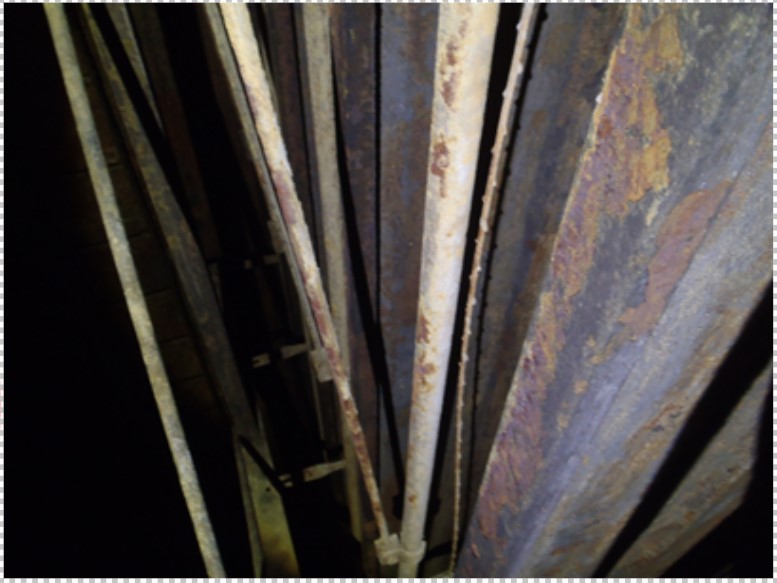
Slack serrated-type DE
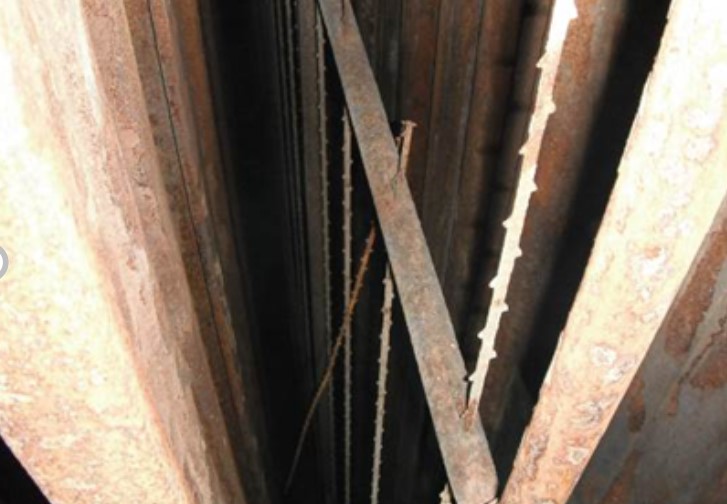
Broken serrated-type DE
Solution
Following the study of design configurations and running data, Tai & Chyun proposed a retrofit from serrated-type DE to Rigid Discharge Electrode (RDE) and upgrade to Switch Mode Power Supply (SMPS) in the first 2 fields as well as replacement to a larger capacity Transformer Rectifier (T/R) unit in the 3rd field. RDEs are break-resistant and much more durable than serrated-type DE. Its spikes and main body are integrally fabricated from a single piece of steel plate (jointless); therefore, after operation covering an appreciable time, the RDEs are usually found with spikes intact and deformation-free. The aggressive spike design also generates a higher corona current with a lower onset voltage.
SMPS, a 3-phase power source, produces an almost DC waveform, giving a higher field voltage, while its modern electronics precisely detect and respond to any spark/arc more rapidly and thus minimizing the setback time, providing a significant improvement in electrical operating conditions. RDE and SMPS both allow more power output into the ESP and thus increase its dust collection efficiency.
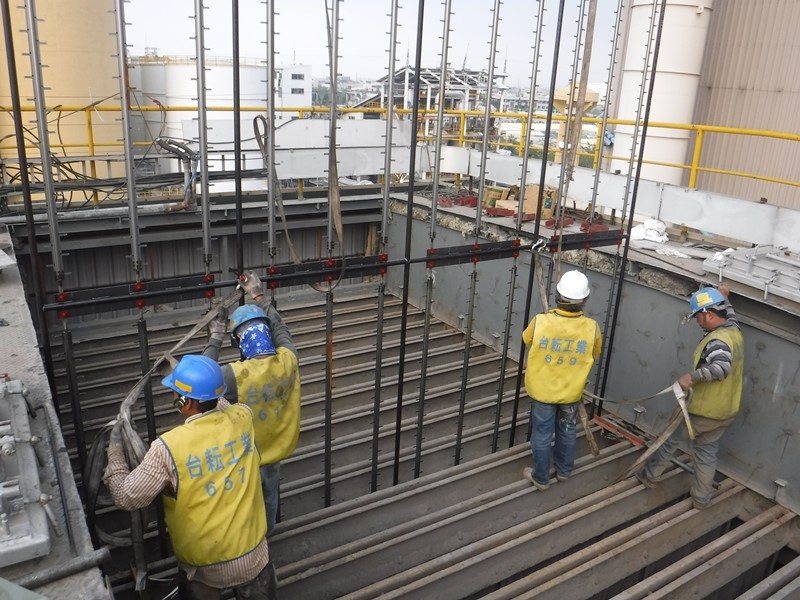
Installing RDE
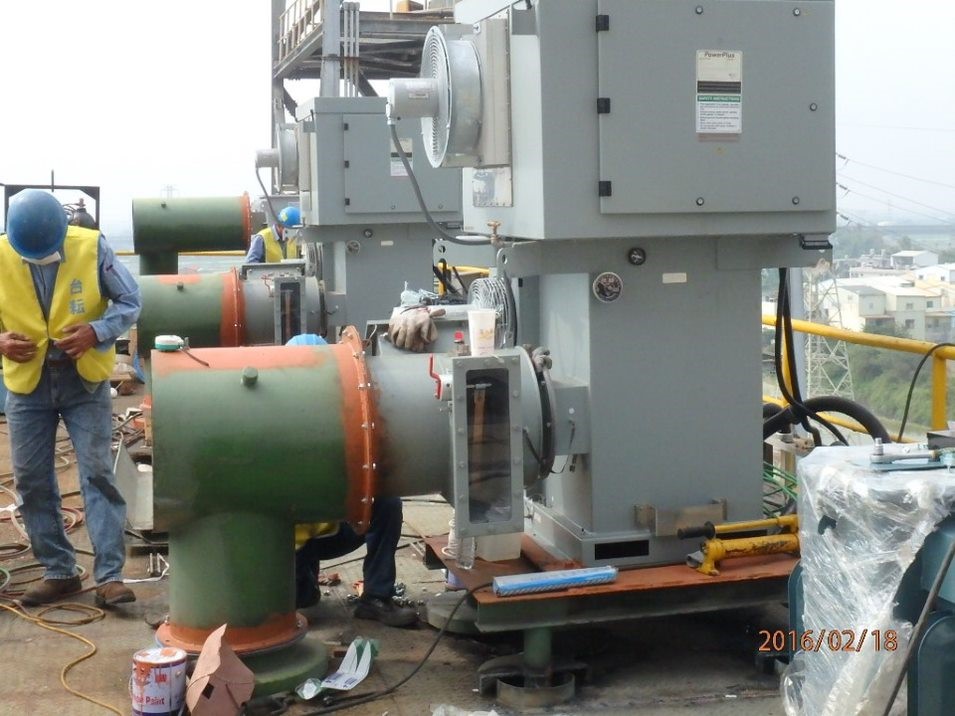
Installing SMPS
Benefit
Before retrofit, baseline test was done and stack emission was measured at 71mg/Nm3. Emission was measured at 6mg/Nm3 after retrofit, successfully achieving expected emission guarantee of 15mg/Nm3 with reduction rate of more than 80%. With proper upgrade strategy, dust collection efficiency of an aging ESP can be restored and optimized giving outlet emission even below 10mg/Nm3.
Further Challenges
During retrofit, Collecting Electrodes (CE) were not replaced due to the quantity of broken CE row is less than 50% although some minor cracks at CE bottom on the rapping side were observed. The condition continued to aggravate over the following 3 years and eventually more than 50% of CE rows were found with broken bottom. These findings impaired the rapping force and dust started to build up on CEs causing frequent sparks. As for serrated-type DE in the 3rd field, nearly 10% and growing in numbers recorded in annual maintenance report were found slack, missing, or deliberately bent (for tightening purpose).
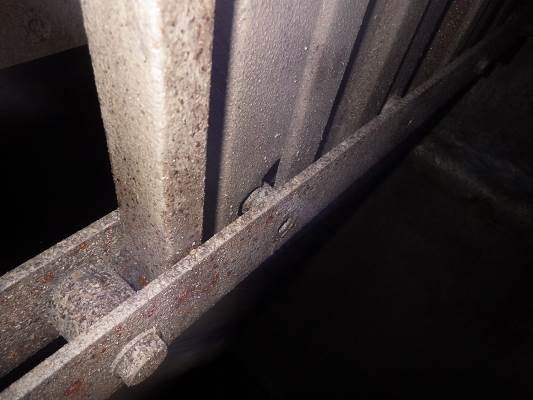
Broken CE bottom
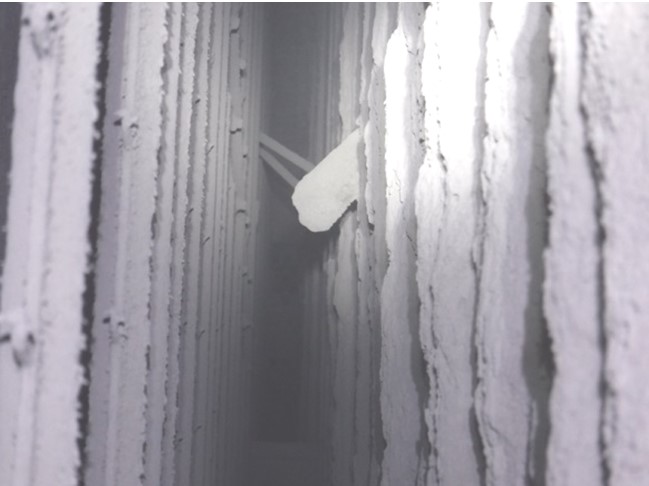
Thick layer of dust build-up on CE
The decision was to replace CE in all 3 fields and DE in the 3rd field. A fixture was erected before shutdown to accommodate pre-assembled CE and DE in order to minimize installation time. The project had been accomplished within time-constraint shutdown period of 18 days. Consequently, running conditions showed much improvement and stability. Performance test gave emission value of 8mg/Nm3.
Maximization of power output and renewal of aging internal parts have proven to greatly improve old ESP’s dust collection efficiency and reduce emission to a constant ideal range of below 10mg/Nm3.
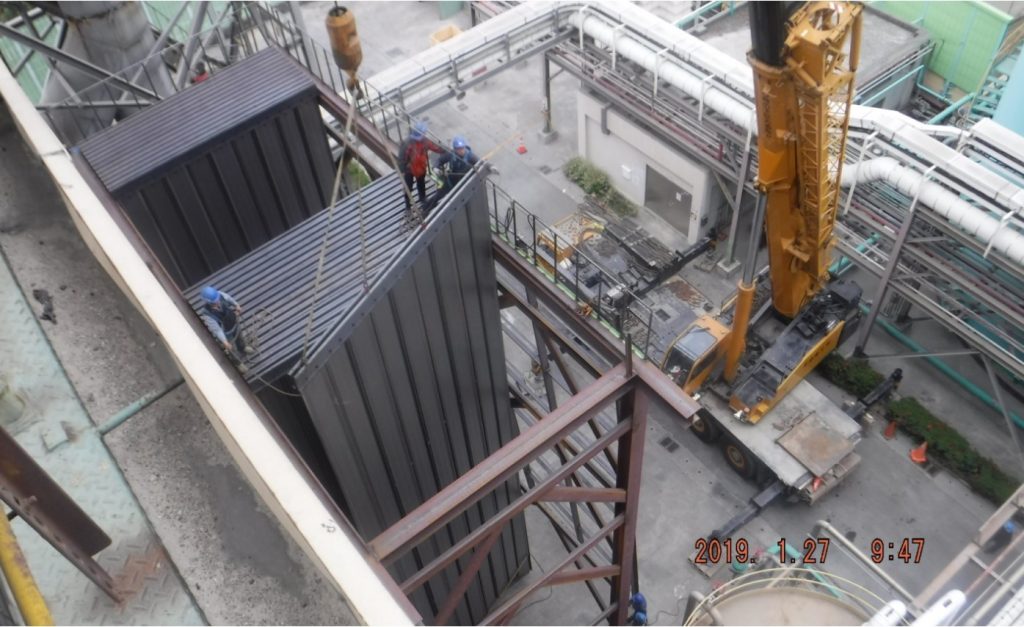
Pre-assembled CE/DE on a fixture